Food Product Recall: How to Handle It
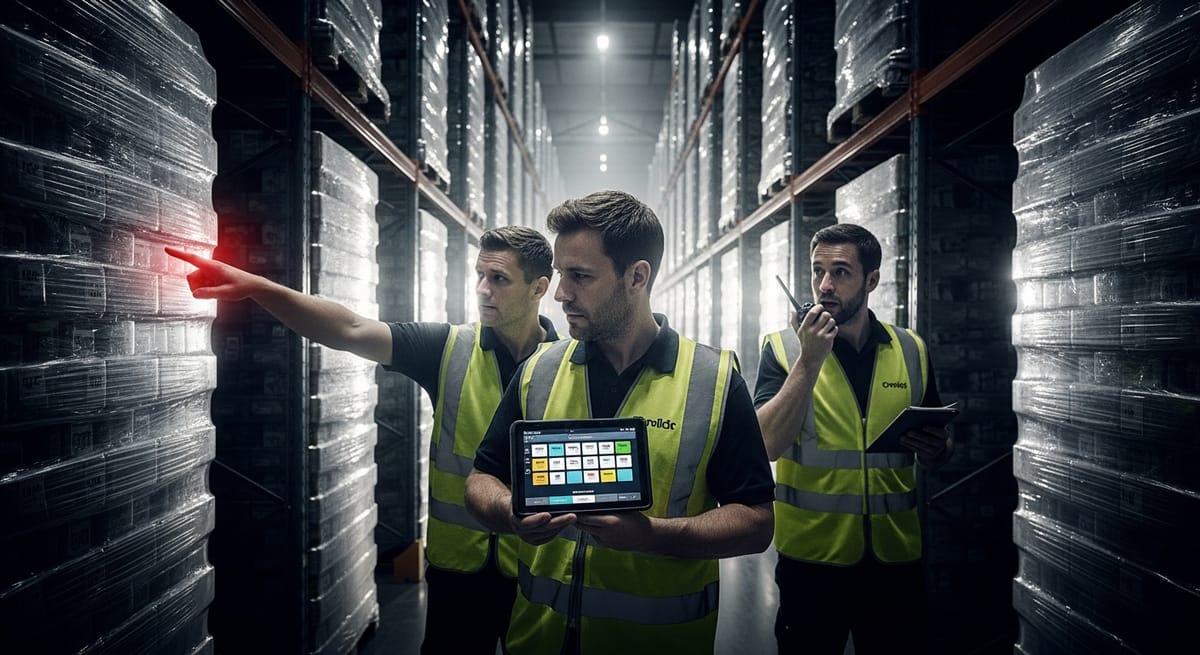
Food Product Recall Without the Chaos
A food product recall is one of the most demanding scenarios a quality manager in the food industry can face. Time pressure, the need to communicate precisely, and the obligation to protect the consumer all converge in just a few hours. But when a company has well-defined processes and the right tools, what could become a devastating crisis turns into a manageable, controlled situation. In this article we explain how to handle every phase of a food recall with method, without losing your cool.
When a product recall is warranted
Not every quality issue leads to a market withdrawal. It's essential to distinguish between a product withdrawal (when the product hasn't yet reached the end consumer or is still in the distribution chain) and a recall proper (when the product may already be in consumers' hands). Both cases demand speed and traceability, but the scope of the actions differs.
The obligation to act kicks in when there's reasonable evidence that a food may pose a health risk: microbiological contamination, undeclared allergens, foreign bodies, residue levels above the legal limit, or labeling errors with health implications. As set out in Regulation (EC) 178/2002 laying down the general principles and requirements of food law (Regulation [EC] 178/2002, 2002), food business operators are required to immediately notify the competent authorities and initiate the procedures needed to withdraw from the market any products that may pose a risk.
Knowing in advance the thresholds that trigger the process, and having documented decision criteria, lets the quality team act without hesitation. Drafting and rehearsing a decision tree before any incident happens is one of the best investments a quality department can make.
Steps of an effective food recall
Effective food crisis management follows a logical sequence that, when respected, greatly reduces reputational and financial impact. Here are the essential phases:
1. Activate the crisis team. As soon as the incident is detected or suspected, the responsible multidisciplinary team must be convened: quality, production, logistics, communications and senior management. Every member should know their role and which decisions they can make on their own.
2. Identify and block batches. This is the most time-critical phase. You need to determine which batches are affected, where they are (your own warehouse, distributors, points of sale), and block them immediately to stop them moving further down the chain.
3. Assess the risk. With the available information, carry out a real risk assessment for the consumer. This assessment determines the scope of communication and whether you need to reach the end consumer.
4. Notify the authorities. Communication with the competent authorities — such as the Spanish Agency for Food Safety and Nutrition (AESAN) (AESAN, n.d.) — must happen promptly, with the fullest information possible: product description, affected batches, geographic distribution and measures taken.
5. Communicate with customers and distributors. Direct customers need clear instructions on what to do: block the product, pull it from sale, and return or destroy it as instructed. Communication should be concise, accurate and documented.
6. Follow up and close out. Once the product has been withdrawn, you need to verify the recall was effective, document every action taken, and analyze the root cause to prevent it happening again. This phase includes writing the final report and updating procedures.
The role of traceability in a food product recall
If there's one factor that determines the speed and scope of a food recall, it's traceability. Robust traceability lets you know, within minutes, which raw materials went into a given batch, which line produced it, which finished products came out of it, and which customers they were shipped to. Without that information, the only safe option is to withdraw far larger volumes than strictly necessary — multiplying the cost and the impact.
Traceability also works in reverse: if the problem originates upstream — for example, a supplier reports contamination in a raw material — the company must be able to quickly identify every product made with that raw material that's currently on the market. This is known as forward and backward traceability, and it's a basic legal and operational requirement for any company in the food industry.
You can dig deeper into building a solid traceability system in our article on the importance of traceability in the food chain. A well-designed system doesn't just meet regulations — it becomes a competitive advantage when a crisis hits.
How Solved speeds up identifying affected batches
At Solved, we designed our quality software with exactly this kind of situation in mind. When every minute counts, technology needs to remove friction and deliver precise information instantly. Here are some of the features that make a fast, orderly product recall possible:
Real-time traceability engine. Solved automatically logs and links every movement of raw materials, semi-finished goods and finished products. When an alert comes in, the quality manager can run a traceability query and get the full impact tree in seconds: which batches are involved and exactly where they are right now.
Batch blocking from the platform. Once affected batches are identified, they can be marked as blocked directly in the system, generating an immediate alert for every user with access. This prevents blocked product from shipping out by mistake and keeps information consistent across the whole organization.
Integrated document management. Every record tied to a batch — process controls, test results, incoming and outgoing delivery notes — lives in a single environment. This makes it far easier to prepare the notification file for the authorities and to communicate with affected customers.
Supplier traceability. If the problem originates in a raw material, Solved lets you identify which other production runs used that same supplier batch, cross-referencing data automatically and cutting analysis time from hours to minutes.
Action logging and audit trail. Every decision made during the process is logged with date, time and the responsible user. This audit log is essential for demonstrating due diligence to the authorities and for reviewing how the crisis was managed afterward.
Peace of mind during a food product recall doesn't come from luck — it comes from preparation. Documented procedures, trained teams and a technology tool like Solved turn a high-stress situation into an executable, controlled process. If you'd like to see how Solved can adapt to your company's needs, we invite you to request a personalized demo.
References
- Spanish Agency for Food Safety and Nutrition. (n.d.). Spanish Agency for Food Safety and Nutrition (AESAN). https://www.aesan.gob.es/
- Regulation (EC) No 178/2002 of the European Parliament and of the Council of 28 January 2002 laying down the general principles and requirements of food law. (2002). https://eur-lex.europa.eu/eli/reg/2002/178/oj?locale=es