Supplier Quality Control: Avoid Failures
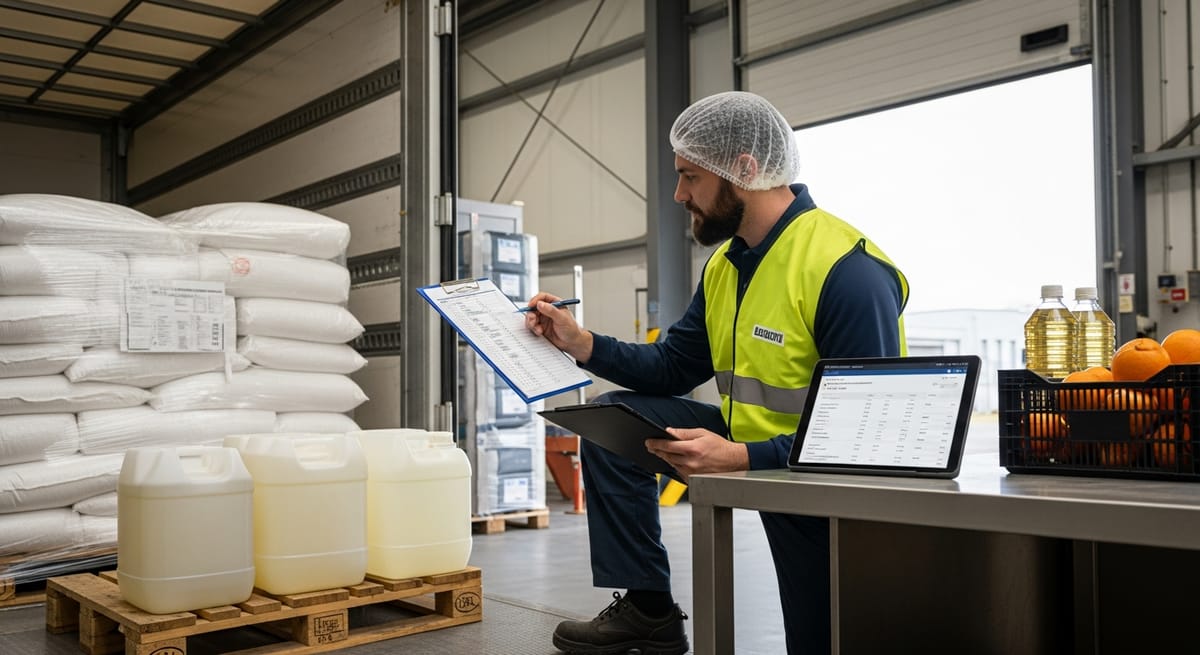
Supplier Quality Control: Avoid Failures
In the food industry, a supply chain is only as strong as its weakest link. Implementing robust supplier quality control isn't optional — it's a necessity for any company that wants to guarantee food safety, comply with current regulations, and protect its reputation. A single failure in raw materials can compromise the entire production process, trigger costly product recalls, and, more seriously, put the end consumer's health at risk. In this article, we explain how to structure an effective system for evaluating and controlling your suppliers, from first contact through ongoing deliveries.
Why Control Your Suppliers' Quality
The most obvious reason is traceability and legal liability. As set out in Regulation (EC) No 178/2002, laying down the general principles of food law (Regulation [EC] 178/2002, 2002), food business operators are responsible for ensuring that the food and feed they sell meets the relevant safety requirements. That directly includes everything they source from third parties.
Beyond regulatory compliance, controlling supplier quality delivers concrete operational benefits:
- Fewer non-conformities: catching deviations at the source stops the problem from ever reaching the production line.
- Cost savings: fewer returns, less waste, and fewer unplanned production stoppages.
- Better supplier-customer relationships: when a supplier knows your criteria, they work to meet them, leading to smoother, more transparent collaboration.
- Certification audit readiness: schemes like BRCGS (BRCGS, n.d.) or IFS require documented evidence of the control exercised over the supply chain.
In short, controlling your suppliers means protecting your product, your brand, and your consumers.
Approval Criteria and Ongoing Evaluation
Supplier approval is the starting point for any quality management system in the supply chain. It means confirming, before starting a business relationship, that the supplier meets a set of minimum requirements defined by your company. These criteria are usually grouped into several categories:
- Legal and technical documentation: health registrations, certificates of analysis, product data sheets, allergen declarations, and liability insurance.
- Quality certifications: checking whether a supplier holds recognized certifications like ISO 22000, BRCGS, or IFS simplifies the initial assessment and reduces your own verification burden.
- Track record and references: industry experience, references from other customers, and years in operation are all indicators of operational maturity.
- Incident response capability: how does the supplier handle a non-conformity? Do they have traceability and recall protocols in place?
Once a supplier is approved, the evaluation doesn't stop there. Ongoing evaluation is essential for maintaining quality over time. The most common metrics for assessing a supplier's periodic performance include the non-conformity rate per batch received, on-time delivery, the quality of documentation provided, and how quickly issues are resolved.
We recommend setting an evaluation frequency (quarterly, biannual, or annual) based on purchase volume and the risk associated with the raw material or service supplied. Critical suppliers — those providing ingredients with high microbiological risk or allergens — should be reviewed more often.
Supplier Audits, Step by Step
Supplier audits are the most powerful tool for verifying, on site, that a supplier's practices match what's stated in their documents. Running them in a structured way maximizes their value and minimizes the time invested. Here's the process in four phases:
1. Planning
Define the audit's scope: will you review only facility hygiene, or also the HACCP system, allergen management, and pest control? Build a checklist based on your company's requirements and the applicable regulations. Give the supplier enough advance notice of the date and scope so they can prepare the necessary documentation.
2. Execution
During the visit, combine document review with direct observation of the facilities and processes. Systematically log all evidence — photos, copies of records, staff interviews. A digital checklist makes this task easier and eliminates the risk of losing information.
3. Report and Scoring
After the audit, prepare a detailed report of the deviations found, classified by severity (critical, major, minor). Assign an overall score that lets you compare suppliers against each other and track them over time.
4. Following Up on Corrective Actions
Every deviation should come with a corrective action plan that has an owner and a deadline. Verify that the actions have actually been implemented before closing out the audit. Without this follow-up, the whole exercise loses much of its value.
If you'd like to dig deeper into how to structure this process, check out our guide on supplier quality audits, where you'll find templates and best practices tailored to the food industry.
How to Centralize Supplier Evaluation and Issues in Solved
Managing supplier quality with scattered spreadsheets, emails, and local document folders is a constant source of errors, lost information, and poor visibility. Solved offers a centralized environment where a supplier's entire lifecycle — from approval to audits to issue management — is integrated into a single platform.
Here are some of the features that make the difference for a quality manager:
- Centralized supplier profile: all documentation — certificates, data sheets, allergen declarations — associated with each supplier in one place, with automatic expiration alerts.
- Automated evaluations and scoring: configure your evaluation criteria and generate periodic performance reports with no extra manual work.
- Digital audit checklists: run your supplier audits directly from the platform, with photo evidence logging and digital signatures.
- Integrated issue management: when a non-conformity is found at receiving, you can open an issue linked to that supplier, assign an owner, and track the action plan. See how our issue management works to see the full workflow.
- Full traceability: every action is logged with date, user, and evidence, which makes preparing for external certification audits far easier.
The result is a supplier quality control system that's more agile, more reliable, and fully traceable. Quality managers stop spending time hunting for documents or chasing down corrective actions, and can focus on what actually adds value: analyzing performance, making decisions, and continuously improving the supply chain.
If you manage quality at a food company and want to see how Solved can adapt to your reality, request a personalized demo and discover what it feels like to have everything under control.
References
- BRCGS. (n.d.). BRCGS Global Standards. https://www.brcgs.com/
- Regulation (EC) No 178/2002 of the European Parliament and of the Council of 28 January 2002 laying down the general principles and requirements of food law. (2002). https://eur-lex.europa.eu/eli/reg/2002/178/oj?locale=en