Food Allergens: Control and Management on the Plant Floor
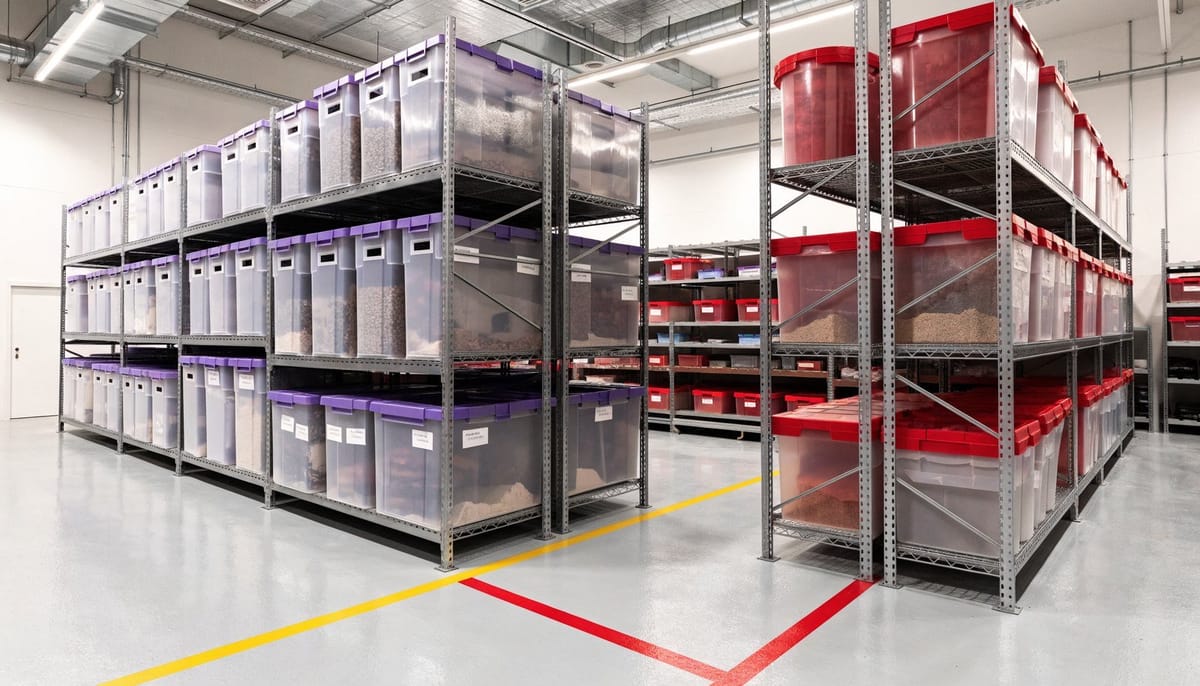
Food allergens: control and management on the plant floor
Controlling food allergens has become one of the absolute priorities for any quality manager in the food industry. And rightly so: a severe allergic reaction can put a consumer's life at real risk, on top of triggering product recalls, regulatory penalties, and reputational damage that's hard to repair. Yet despite how important the topic is, allergen management remains one of the areas where most companies stumble when an audit comes around. In this article we look at why that happens, where the main risks on the plant floor are concentrated, and how to build a robust, traceable control system.
Why allergen control is one of the biggest failure points in quality audits
When an auditor from BRCGS (BRCGS, n.d.) or any other GFSI standard reviews the allergens chapter, what they're looking for isn't just a written procedure — it's real evidence that the procedure is followed day in, day out. That's exactly where many plants fall short.
The most common reasons for allergen-related non-conformities in audits are:
- Outdated documentation. The list of allergens present on the plant floor doesn't reflect the ingredients actually in use, whether because a supplier changed or a new raw material was introduced without updating the hazard analysis.
- Missing verification records. A cleaning procedure for allergen changeover exists, but no one can prove it was carried out correctly on every shift.
- Insufficient staff training. Line operators don't know which products contain critical allergens, or don't know how to react to an incident.
- Poor communication with suppliers. Raw material spec sheets don't clearly state declared allergens or those present unintentionally.
The result is an allergen management system that exists on paper but doesn't build enough confidence to guarantee consumer safety or pass an audit without findings.
Allergen cross-contamination: where it happens on the plant floor and how to prevent it
Controlling cross-contact allergens is probably the most technically complex part of allergen management. Cross-contamination can occur at multiple points in the process and, in many cases, invisibly — with no change in color, smell, or texture to give it away.
The most common sources of cross-contamination in a food plant are:
- Shared lines. When a single line makes products with and without a given allergen, residue stuck to surfaces, seals, rollers, or conveyors can contaminate the next batch.
- Air and dust. Flours, spices, or powdered ingredients containing allergens can become airborne and settle on products or surfaces far from the point of use.
- Shared tools and PPE. Pallets, scrapers, gloves, or even work clothing can carry allergens from one area to another without differentiated management.
- Improper storage. Allergenic raw materials stored without adequate physical separation or in unlabeled containers are a constant source of risk.
- Unmanaged shift and production changeovers. The lack of a production sequence planned around each product's allergen profile is one of the most widespread mistakes.
Preventing cross-contamination requires combining physical measures (zone separation, color coding, segregated storage) with procedural measures (production order, validated and verified cleaning protocols) and ongoing training for the production team. Validating cleaning procedures — proving that the allergen drops below the set threshold after cleaning — is a requirement that more and more standards explicitly demand.
What allergen labeling regulations require, and what happens when they fail
From a regulatory standpoint, allergen labeling is clearly defined. Regulation (EC) No 178/2002 (Regulation [EC] 178/2002, 2002) sets out the general principles of European food law, including the requirement that food must not mislead consumers and that the information provided must be truthful, clear, and understandable. Building on that, specific labeling regulations — set out in Regulation (EU) 1169/2011 — require the 14 mandatory allergen groups to be prominently declared whenever present as an ingredient.
But the challenge goes beyond declaring what's added intentionally. Labeling for the unintentional presence of allergens (the familiar "may contain traces of…" statements) remains a gray area where many companies operate without solid technical criteria, which can lead to both false alarms for consumers and dangerous omissions.
The consequences of an allergen labeling failure can be severe. On the safety side, it can trigger a recall or food alert managed by the Spanish Food Safety and Nutrition Agency (AESAN, n.d.) through the RASFF system. On the financial side, the cost of a product recall — logistics, destruction, communication, extraordinary audits — can run into hundreds of thousands of euros. And on the reputational side, the trust of distributors and consumers can take years to rebuild.
If you want to dig deeper into the full regulatory requirements, check out our article on food labeling and what regulations require, where we cover this topic in detail.
How to manage your allergen plan with digital records instead of loose lists
An effective allergen plan isn't a document sitting in a folder that gets checked once a year. It's a living system that needs updating every time a raw material, supplier, formulation, or process changes. And for that system to work in the reality of a plant floor — with shifts, production pressure, and multiple people involved — it needs to be agile, accessible, and verifiable.
The difference between managing an allergen plan with spreadsheets and paper lists versus a digital quality platform is huge. These are the main benefits of digitalizing this area:
- Full traceability. Every record is tied to a user, a date, and a time. Any auditor can verify in real time that controls were carried out and that evidence is available.
- Automatic alerts. If a raw material's allergen profile changes, the system can automatically notify the people affected before it enters production.
- Integrated supplier management. Spec sheets, allergen declarations, and supplier certificates are centralized and linked directly to each ingredient or semi-finished product.
- Digitized cleaning protocols. Allergen changeover cleaning checklists are completed from mobile devices right on the line, eliminating paper and reducing the risk of missed steps.
- Simple audit reporting. Generating the allergen plan compliance report for an audit goes from hours of work to a matter of minutes.
Rolling out a digital allergen management system isn't about technology for its own sake — it's a strategic decision that reduces real incident risk, improves audit readiness, and frees the quality team from admin work so it can focus on what matters: guaranteeing product safety.
At Solved we've spent years helping quality teams in the food industry turn manual, scattered processes into cohesive digital systems. If you'd like to see how it could work on your plant floor, we'd be glad to walk you through it.
References
- Spanish Food Safety and Nutrition Agency. (n.d.). Agencia Española de Seguridad Alimentaria y Nutrición (AESAN). https://www.aesan.gob.es/
- BRCGS. (n.d.). BRCGS Global Standards. https://www.brcgs.com/
- Regulation (EC) No 178/2002 of the European Parliament and of the Council of 28 January 2002 laying down the general principles and requirements of food law. (2002). https://eur-lex.europa.eu/eli/reg/2002/178/oj?locale=es