HACCP Hazard Analysis: Types and How to Assess Them
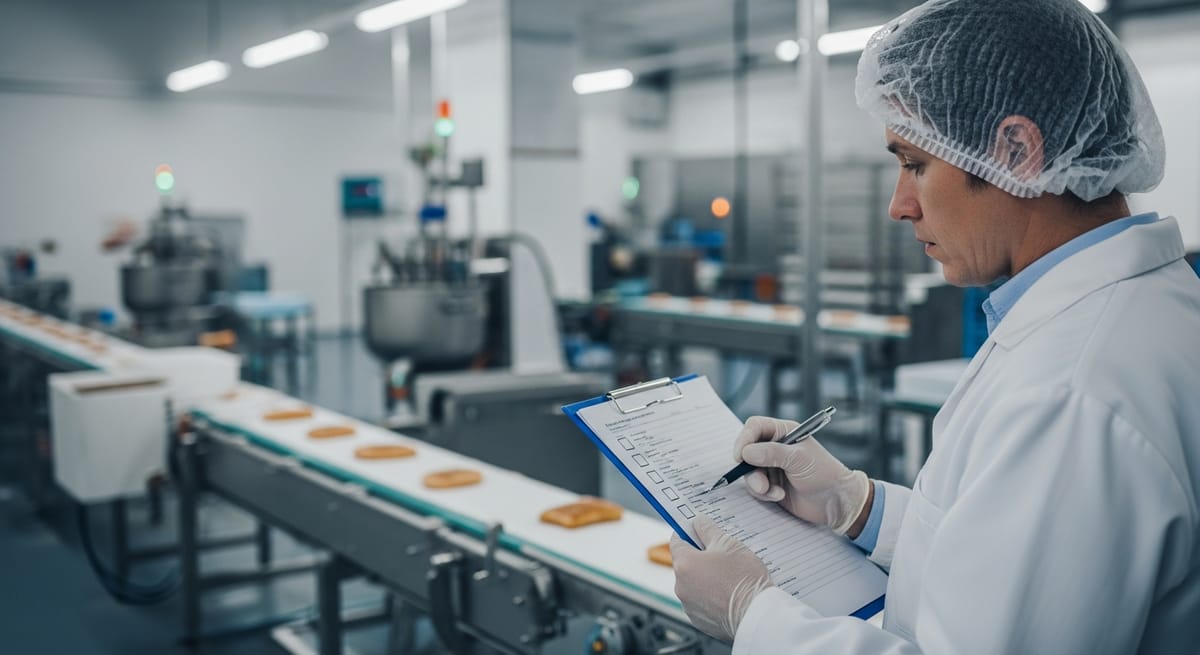
Hazard analysis that prevents nasty surprises
In the day-to-day of any food production plant, hazard analysis is the tool that makes the difference between reacting to a problem and getting ahead of it. Without this systematic, upfront exercise, the quality team works blind: it catches deviations only after they've happened, manages product recalls under pressure, and, in the worst case, puts consumer safety at risk. If you're looking to structure your preventive system better, this article gives you the keys to understanding what a rigorous hazard analysis involves, how to classify and assess each risk, and how Solved helps you document it without wasting time.
What hazard analysis is in HACCP
HACCP (Hazard Analysis and Critical Control Points) is the most widely used food safety management system in the industry. Its core pillar is precisely hazard analysis: a structured process in which the quality team identifies every agent that could harm the consumer, assesses the likelihood of it occurring and the severity of its consequences, and decides which control measures are needed to eliminate it or reduce it to an acceptable level.
This analysis isn't a bureaucratic formality — it's the foundation on which critical control points (CCPs), critical limits, monitoring procedures, and corrective action plans are built. Without a solid hazard analysis, everything that comes after stands on shaky ground. As set out in Regulation (EC) 852/2004 on the hygiene of foodstuffs (Regulation [EC] 852/2004, 2004), food business operators are required to establish, implement, and maintain permanent procedures based on HACCP principles, which places hazard analysis at the heart of European legal compliance.
In the food industry, the challenges are numerous: raw materials from different origins, demanding cold chains, allergens, complex processing, and constantly evolving regulations. Hazard and critical point analysis isn't something you do once and file away — it needs reviewing every time an ingredient, supplier, process, or facility changes.
Biological, chemical, and physical hazards
The first step in hazard analysis is identifying which types of agents could compromise product safety. The classic, internationally recognized classification distinguishes three broad categories:
Biological hazards. These are the most common and often the ones with the biggest impact on public health. They include pathogenic bacteria such as Salmonella, Listeria monocytogenes, Escherichia coli O157:H7, or Campylobacter, as well as viruses, parasites, and toxigenic fungi. Their presence depends on the hygiene of raw materials, temperature and time conditions during processing and storage, and handling practices.
Chemical hazards. These cover a wide spectrum: pesticide residues, heavy metals, mycotoxins, undeclared allergens, additives exceeding legal limits, cleaning and disinfection products, lubricants, or migration contaminants from packaging. Assessing risk in this category requires knowing both the sources of contamination and the relevant toxicological thresholds.
Physical hazards. Fragments of glass, metal, wood, hard plastic, or bone that can reach the product through raw materials, machinery, or the production environment. While their health impact tends to be localized (cuts, dental injuries), they trigger significant product recalls and reputational damage.
A thorough identification requires reviewing every stage of the process flow diagram: receiving raw materials, storage, preparation, processing, packaging, finished product storage, and distribution. It's also important not to overlook cross-contamination hazards, especially those related to allergens.
How to assess likelihood and severity
Identifying food hazards is only half the job. The other half is prioritizing: not every hazard carries the same level of real risk, and control resources need to be concentrated where the potential impact is greatest. This is where risk assessment comes in, combining two variables:
Likelihood (or frequency). How often could this hazard occur under normal operating conditions? Estimating it draws on the company's historical data, industry incidents, supplier records, previous test results, and the technical judgment of the HACCP team.
Severity. What consequences would the consumer face if the hazard reached the final product uncontrolled? This assesses potential harm, ranging from mild discomfort to serious illness or death, including effects on vulnerable populations (pregnant women, the elderly, immunocompromised individuals).
Combining both variables is usually laid out in a risk matrix that crosses likelihood and severity levels. Hazards scoring high on both dimensions must be controlled through a CCP or, at minimum, through reinforced prerequisite programs. Low-scoring hazards can be managed through standard good hygiene practices.
This evidence-based approach is the one recommended by the FAO/WHO Codex Alimentarius (Codex Alimentarius, n.d.) as the international reference methodology for food safety management. Applying it consistently, with records that document the team's reasoning, is key for both internal audits and official inspections.
One aspect quality managers often underestimate is the importance of traceability at this stage: knowing exactly where each ingredient came from, which batch it was used in, and where the finished product ended up makes it possible to contain the scope of a problem if the hazard analysis later reveals a potential deviation.
How to document the analysis and its controls in Solved
One of the biggest challenges in hazard analysis isn't methodological — it's operational: keeping documentation up to date, accessible, and useful for audits and periodic reviews. Teams working with scattered spreadsheets or paper documents know exactly how much effort it takes to reconstruct the reasoning behind a decision made two years ago, or to track whether a hazard was reassessed after a supplier change.
Solved is built specifically for the food industry and solves this problem at the root. On the platform you can structure your HACCP analysis digitally, centralizing in a single environment the hazard identification for each process stage, the likelihood-and-severity assessment matrix, the decision on whether a hazard becomes a CCP or an alternative control measure, and the associated monitoring records and corrective actions.
Every element of the analysis is tracked: who entered it, when it was reviewed, and what changes were made. This not only makes audit preparation easier for standards like BRC, IFS, or FSSC 22000, it also lets the quality team spot in real time whether a control measure shows frequent deviations that should trigger a rethink of the original risk assessment.
Solved also connects hazard analysis with the rest of the quality management system: product specs, suppliers, sampling plans, issues, and non-conformities. When a problem comes up in production, the quality manager can cross-reference the issue against the current hazard analysis and work out within minutes whether a control was in place, whether it was being applied correctly, and whether the risk assessment needs updating.
The result is a living system, not a filed-away document: a hazard analysis that actually prevents nasty surprises instead of just recording the ones that already happened. If you want to see how this works in practice for a company like yours, get in touch with the Solved team and request a demo tailored to your sector.
References
- Codex Alimentarius. (n.d.). Codex Alimentarius (FAO/WHO). https://www.fao.org/fao-who-codexalimentarius/
- Regulation (EC) No 852/2004 of the European Parliament and of the Council of 29 April 2004 on the hygiene of foodstuffs. (2004). https://eur-lex.europa.eu/eli/reg/2004/852/oj?locale=es