Raw material receiving inspection
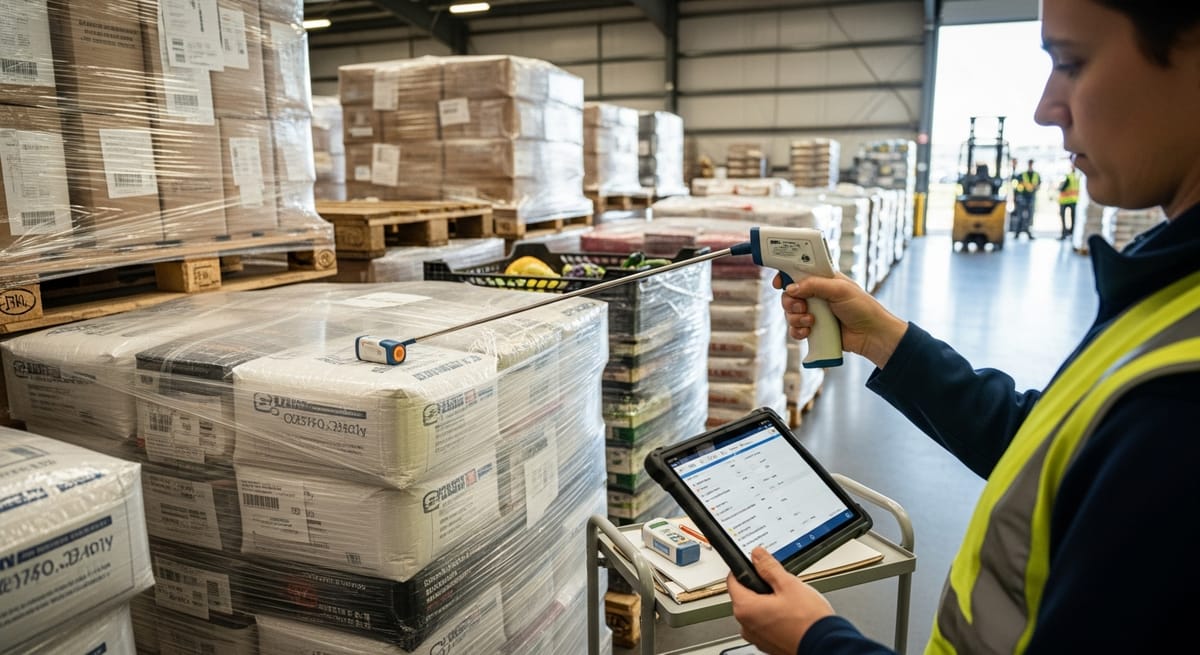
Raw material receiving inspection
The raw material receiving inspection is one of the most critical controls in any food industry operation. It's the first quality and safety filter before any ingredient or material enters the production process. A failure at this stage can compromise the whole chain: from the safety of the finished product to customer satisfaction and regulatory compliance. When receiving control is solid, downstream problems drop significantly. When it's weak or inconsistent, the consequences can be costly and hard to manage.
In this article we cover the key points every quality manager needs to have under control: what gets checked on receipt, which documents must accompany the batch, how to handle a non-conforming batch without stopping production, and how to log receipt to guarantee traceability.
What gets checked during raw material receiving inspection, and the criteria for accepting or rejecting a batch
When a raw material arrives, the quality team needs to evaluate a set of parameters that fall into three broad categories: organoleptic and physical condition, transport and temperature conditions, and documentary compliance.
On the physical and organoleptic side, the team checks the condition of the packaging (integrity, no dents, no visible moisture or contamination), the appearance, colour, smell and texture of the product where relevant, and the presence of foreign bodies or pests. These checks are done visually and, in some cases, with the help of instruments such as thermometers, pH meters or refractometers.
To decide whether to accept or reject a batch, you need acceptance criteria defined in advance in each raw material's technical specification sheet. These criteria must set clear limits: maximum receiving temperature for chilled or frozen products, acceptable pH ranges, absence of certain microorganisms, and so on. Without predefined criteria, the decision is left to the operator's subjective judgement, which creates inconsistency and risk.
As set out in Regulation (EC) No 852/2004 on the hygiene of foodstuffs (Regulation [EC] 852/2004, 2004), food business operators must apply procedures based on HACCP principles, which includes controlling critical points starting from the receipt of raw materials. This reinforces the need for receiving inspection to be integrated into the company's food safety management system rather than treated as a paperwork exercise.
A good resource to go deeper on this is Solved's receiving inspection glossary entry, with definitions and practical examples applied to the food industry.
Documentation that must accompany the batch: certificate of analysis, technical spec sheet and temperature record
A raw material can't be considered conforming just because it looks fine. The documentation accompanying the batch is just as much a part of receiving control, and in many cases it's the first warning sign of a potential problem.
The minimum documents to check at every receipt are:
- Delivery note: identifies the batch, quantity, supplier and agreed delivery conditions.
- Product technical spec sheet: describes the product's specifications and the criteria it must meet. It should be up to date and agreed with the supplier.
- Certificate of analysis (CoA): a document issued by the supplier or an accredited laboratory confirming that the batch meets the specified analytical parameters. Reviewing it is mandatory for raw materials with microbiological or allergen risk.
- Transport temperature record: essential for products that require a cold chain. It can come as a temperature graph or as a printout from a data logger.
- Declaration of conformity or supplier certificates: such as organic, gluten-free, kosher or halal certifications, when relevant to the product's use.
Reviewing this documentation at the time of receipt lets you catch deviations before the product enters storage. If the certificate of analysis doesn't arrive with the batch, the recommended approach is to hold the batch in quarantine until it's received, rather than releasing it by default.
To improve control over suppliers and reduce surprises at receiving, it's useful to pair this process with a supplier quality control strategy that lets you get ahead of failures before they reach your plant.
What to do with a non-conforming batch without stopping production
One of the biggest challenges for a quality manager is handling a non-conforming batch without creating a bottleneck on the production line. Operational pressure can push teams toward releasing batches that don't comply, and that's exactly what needs to be avoided.
The first step with a non-conforming batch is immediate physical quarantine: separate the suspect or rejected material from the rest of the raw materials and clearly flag it so it isn't used by mistake. In digital environments, this block can be applied directly in the management system, tagging the corresponding batch number as "in quarantine" or "rejected."
Next, a documented non-conformity should be opened, with a description of the problem, evidence (photos, temperature data, analytical results) and a reference to the affected supplier and batch. This non-conformity is the basis for managing the issue with the supplier: a claim, batch replacement, a request for a new certificate of analysis, or starting a supplier deregistration process if the failure is recurring.
If production needs to continue, there are several options depending on the case: use previously approved alternative material, activate a contingency plan with another approved supplier, or, in justified cases, conditionally release the batch under the quality manager's authorization while pending checks are completed — always keeping a written record of the decision and its conditions.
What matters is that none of these decisions is made verbally or informally. Everything must be logged.
How to log the receipt and link it to batch traceability
The receiving record isn't just a paperwork requirement: it's the piece that connects raw material inspection with finished product traceability. Without this link, in the event of a food safety alert or complaint, it would be impossible to identify which raw material batches were used in each production run and, therefore, which finished products could be affected.
A complete receiving record should include, at minimum: date and time of receipt, supplier, supplier's batch number, quantity received, inspection outcome (accepted, rejected, in quarantine), parameters checked and the signature of the person responsible. The documents received — delivery note, certificate of analysis and temperature record — should be attached to this record.
The next step is to assign an internal batch number that allows that material to be tracked throughout the process: from the warehouse to the production line, and from the line to the finished product and its shipment. This is what's known as batch traceability, a requirement across the entire European food chain.
Regulation (EC) No 178/2002 laying down the general principles and requirements of food law (Regulation [EC] 178/2002, 2002) establishes the obligation of traceability at every stage of the food chain, including the receipt of raw materials. This means the receiving record isn't optional — it's a legal obligation.
When these records are managed on paper, the risk of lost information, errors or slow lookups is high. Food industry quality software lets you digitize the whole process: log receipt from a tablet or PC, attach documents, assign internal batch numbers automatically and link each raw material batch to the products it was used in. That turns receiving inspection into a real traceability asset, not a bureaucratic formality.
In short, a well-executed raw material receiving inspection protects food safety, improves supplier relationships and ensures that, whatever comes up, the company can act quickly and rigorously. The key is having clear criteria, documentation in order, and digital records that connect every batch to the final product.
References
- Regulation (EC) No 178/2002 of the European Parliament and of the Council of 28 January 2002 laying down the general principles and requirements of food law. (2002). https://eur-lex.europa.eu/eli/reg/2002/178/oj?locale=es
- Regulation (EC) No 852/2004 of the European Parliament and of the Council of 29 April 2004 on the hygiene of foodstuffs. (2004). https://eur-lex.europa.eu/eli/reg/2004/852/oj?locale=es