Non-Conformity Management in the Food Industry: A Complete Guide
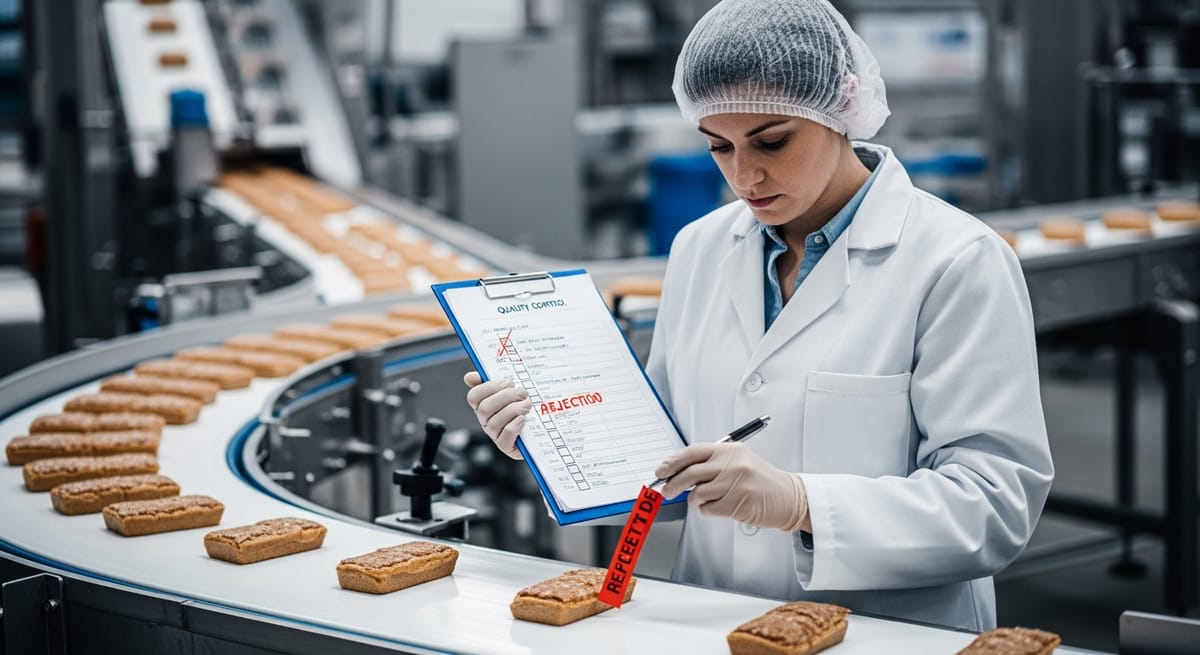
Non-conformity management in the food industry: a complete guide
Non-conformity management is one of the fundamental pillars of any quality system in the food industry. Spotting a deviation is only the first step; what separates a reactive company from an excellent one is the ability to log it, analyze it, fix it, and, above all, prevent it from happening again. In this article, we explain how to build a robust non-conformity management process that helps you reduce issues, comply with current regulations, and continuously improve your processes.
What is a non-conformity in the food industry
A non-conformity is any failure to meet a previously established requirement: it could be a microbiological parameter out of range, a supplier delivering raw materials without the required documentation, a process that breaches the critical limits defined in the HACCP plan, or a finished product that doesn't meet labeling specifications.
In the food sector, non-conformities can be classified by origin (internal or external), severity (minor, major, or critical), and the area where they arise (production, lab, logistics, suppliers, and so on). This initial classification is key, because it determines how urgent the response needs to be and how far it must be escalated.
From a regulatory standpoint, having a documented system for managing deviations isn't optional. As set out in Regulation (EC) 852/2004 on the hygiene of foodstuffs (Regulation [EC] 852/2004, 2004), food business operators must apply procedures based on HACCP principles and keep records demonstrating that those procedures are being applied correctly. For audit purposes, an unrecorded non-conformity is a non-conformity that doesn't exist… until a serious problem occurs.
Quality non-conformities in food also have a direct impact on consumer safety, brand reputation, and operating costs. Industry trend research shows that companies that systematize issue management significantly reduce customer complaints and the costs tied to rework and product recalls.
How to log and classify non-conformities efficiently
Logging non-conformities is the starting point of the entire process. A good logging system needs to be quick, accessible to everyone involved, and structured enough to capture the necessary information without becoming a paperwork burden.
Here are the essential elements a non-conformity record should include in the food sector:
- Unique identification: case number, date and time of detection.
- Detailed description: what happened, where, at what stage of the process, and who detected it.
- Classification: origin (internal/external), affected area, and severity level.
- Impact on product: batch, quantity affected, and product disposition (release, quarantine, destruction).
- Evidence: photos, temperature logs, lab results, or other supporting documents.
- Assigned owner: the person responsible for driving the resolution.
Classifying by severity matters a great deal. A minor non-conformity can be resolved with an immediate fix, while a major or critical one calls for a root-cause analysis, formal corrective actions, and possibly notification to the relevant authority. Having clear, predefined criteria for this classification avoids ambiguity and speeds up decision-making.
As for tooling, many companies still manage their non-conformities in spreadsheets or on paper. That may work at a small scale, but this approach has clear limits: it makes real-time tracking difficult, creates information silos, complicates traceability, and increases the risk of errors. Digital solutions, like the ones Solved offers through its quality management features, let you centralize every record, automate notifications, and generate statistical reports with a single click — making life far easier for quality managers.
A good system should also support horizontal and vertical traceability: the ability to link a non-conformity to the affected product batch, the raw material supplier, the operator involved, or the audit where it was detected. That connection between data points is what turns a log into a genuine improvement tool.
Corrective and preventive actions: closing the continuous improvement loop
Logging a non-conformity without implementing an effective corrective action is like writing down a problem and filing it away in a drawer. Corrective actions in the food industry are the mechanism that closes the loop and turns every issue into an improvement opportunity.
The corrective and preventive action process (known as CAPA) generally follows these stages:
- Immediate correction: a containment measure to neutralize the short-term impact (for example, holding a batch, repairing equipment, or isolating a product).
- Root-cause analysis: identifying the real source of the problem using tools such as the 5 whys, the Ishikawa diagram, or fault tree analysis.
- Corrective action: a measure aimed at eliminating the root cause and preventing the problem from recurring.
- Preventive action: a proactive measure to anticipate and prevent potential problems in similar processes.
- Effectiveness verification: checking, within a defined timeframe, that the actions implemented actually solved the problem.
- Closure and documentation: a formal record of the non-conformity's closure, with all the evidence proving it was resolved.
Effectiveness verification is the step that gets skipped most often — and it's also the most valuable one. Without it, there's no way to know whether the corrective action really worked or whether the problem could resurface. Setting up tracking indicators (quality KPIs) and reviewing them regularly is the foundation of any solid continuous improvement system.
In the context of food quality audits, a well-managed non-conformity history — complete with corrective actions and closure evidence — is one of the things auditors value most. If you want to be better prepared for your next audit, check out our guide to food quality audits.
On top of that, analyzing non-conformities in aggregate over time helps you spot patterns: suppliers with recurring issues, production lines with higher deviation rates, or seasonal periods of higher risk. This kind of statistical analysis is what drives systemic improvement, beyond just handling cases one by one.
Specialized non-conformity software — like what you can see in our free Solved demo — automates much of this process: from the initial log entry to automatic reminders for corrective action deadlines, plus trend reports. That frees up quality teams to focus on what really matters: analyzing, deciding, and improving.
Conclusion
Non-conformity management in the food industry isn't just a regulatory obligation — it's a lever for competitiveness. Companies that invest in systematizing non-conformity logging, root-cause analysis, and corrective action tracking build more resilient organizations, with fewer recurring issues and greater trust from customers and auditors alike. Today, technology is the most effective ally for achieving this without piling more administrative work onto quality teams.
References
- Regulation (EC) No 852/2004 of the European Parliament and of the Council of 29 April 2004 on the hygiene of foodstuffs. (2004). https://eur-lex.europa.eu/eli/reg/2004/852/oj?locale=es