Quality Control in Canning: Challenges and Digital Solutions
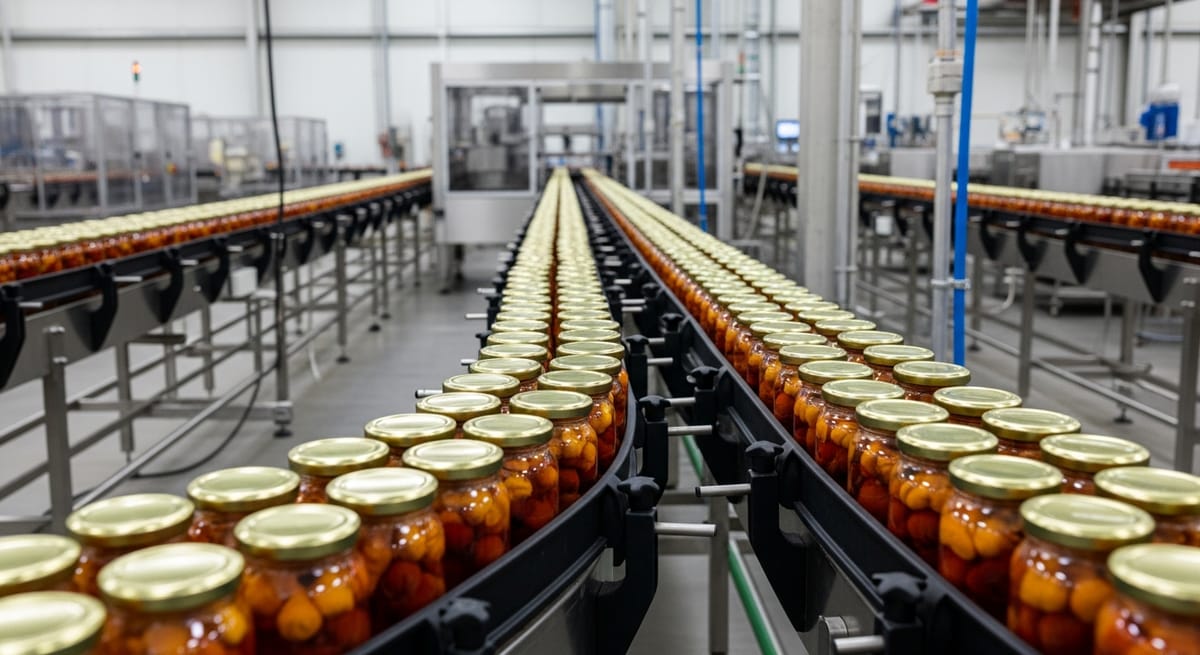
Quality control in canning: challenges and digital solutions
Quality control in canning is one of the most demanding processes in the food industry. Canning companies work with products that must remain safe and stable for months or even years, which requires a chain of rigorous controls from raw material receiving through to shipping the finished product. In an increasingly regulated and competitive environment, digitizing these processes is no longer optional — it's a strategic necessity.
Main quality challenges in the canning industry
Canning companies face specific challenges that set them apart from other food industries. The nature of the product — subjected to intense heat treatment and stored for long periods — demands thorough control at every stage of production. These are the most common challenges we see in canning companies across the country:
Managing heat treatment and sterilization. Controlling sterilization or pasteurization is the critical point above all others for quality in the canning industry. Any deviation in temperature, time or pressure can compromise the safety of the final product. Recording, validating and filing this data manually is slow, error-prone and hard to audit.
Traceability across the entire chain. As set out in Regulation (EC) 178/2002 on general food law (Regulation [EC] 178/2002, 2002), food business operators are required to ensure the traceability of their products at every stage of production, processing and distribution. For a canning company handling multiple batches, suppliers and product references, building this traceability manually takes enormous effort and carries real risk in the event of a food safety alert.
Packaging and seal control. Container integrity is essential in canning. A faulty seal can lead to microbiological contamination, loss of vacuum or product spoilage. Double-seam and seal-integrity checks need to be run frequently and properly documented.
Document management and regulatory compliance. Procedures, HACCP records, cleaning plans, equipment calibrations, supplier certificates... the documentation load at a canning company is enormous. Keeping everything up to date, accessible and organized for an audit is one of the biggest pain points for quality managers.
Staff turnover and ongoing training. Seasonal campaigns mean bringing on large numbers of new staff at once. Making sure every operator knows and correctly applies quality procedures is an operational challenge that directly affects product consistency.
Critical controls that can't fail in the canning industry
Beyond the general challenges, some controls carry serious consequences if they're skipped or fail — both for consumer safety and for business continuity. A solid quality management system must ensure the following controls are properly carried out and recorded:
HACCP and critical control points (CCPs). Hazard analysis and critical control points form the backbone of food safety in canning. As set out in Regulation (EC) 852/2004 on the hygiene of foodstuffs (Regulation [EC] 852/2004, 2004), every food business operator must put in place, implement and maintain procedures based on HACCP principles. At a canning company, CCPs typically include heat treatment, pH control, water activity and seal inspection.
Raw material and supplier control. The quality of the final product depends heavily on the quality of the raw materials. Verifying specifications, reviewing certificates and running receiving checks is essential to stop a problem at the source from reaching the end consumer.
Calibration and maintenance of critical equipment. Autoclaves, thermometers, pressure gauges, double-seaming equipment... the reliability of control results depends directly on the condition and calibration of measuring instruments. A miscalibrated piece of equipment can invalidate hours of production and put a batch's safety at risk.
Microbiological and physicochemical control of the finished product. Finished-product testing confirms that the treatment was effective and that the product meets the established safety parameters.
Non-conformity management and corrective actions. Detecting a deviation is only the first step. Recording it correctly, investigating its root cause and implementing an effective corrective action is what separates a company that learns from its mistakes from one that repeats them.
Quality control in canning: how Solved helps canning companies stay compliant
Solved is quality management software built specifically for the food industry. Its practical approach and adaptability make it a particularly useful tool for canning companies that want to digitize their processes without losing flexibility.
Here are some of the ways Solved transforms quality management in the canning industry:
Digitizing HACCP and control records. With Solved, operators log control point data — sterilization temperatures, seal checks, visual inspections — directly from their workstation. Everything is stored in real time, with a timestamp and user record, which makes internal and external audits dramatically easier.
Integrated bidirectional traceability. The system lets you trace any batch from raw material through to finished product, or the other way around. In the event of a food safety alert or a customer complaint, the quality team can locate every affected product within minutes and make decisions based on precise information.
Non-conformity management and corrective actions. Solved centralizes the entire flow: detection, classification, owner assignment, corrective action tracking and closure. This gives quality managers a complete view of the status of deviations and helps them spot patterns for improvement.
Documentation always up to date and accessible. Solved's document manager keeps all procedures, instructions and records organized, with version control and access managed by user role. No more physical folders that get lost or outdated versions circulating around the plant.
Real-time indicators and dashboards. Quality managers can access dashboards with the department's key KPIs: open issues, control results, calibration status, non-conformity trends... a clear view for making better decisions.
Canning companies of all sizes have already transformed their quality management with Solved. You can read their stories in our success stories section, or explore all the possibilities on our features page.
If you want to see how Solved fits the specific needs of your canning company, we invite you to request a free demo. Our team will review your situation and show you, using real cases, how digitization can cut administrative workload, improve regulatory compliance and boost your quality department's efficiency.
The canning industry has spent decades guaranteeing the safety and quality of its products through rigorous processes. Digitization doesn't change that commitment — it strengthens it, makes it more efficient, and prepares it for the challenges ahead.
References
- Regulation (EC) No 178/2002 of the European Parliament and of the Council of 28 January 2002 laying down the general principles and requirements of food law. (2002). https://eur-lex.europa.eu/eli/reg/2002/178/oj?locale=en
- Regulation (EC) No 852/2004 of the European Parliament and of the Council of 29 April 2004 on the hygiene of foodstuffs. (2004). https://eur-lex.europa.eu/eli/reg/2004/852/oj?locale=en