The Invisible Cost of Unreported Issues
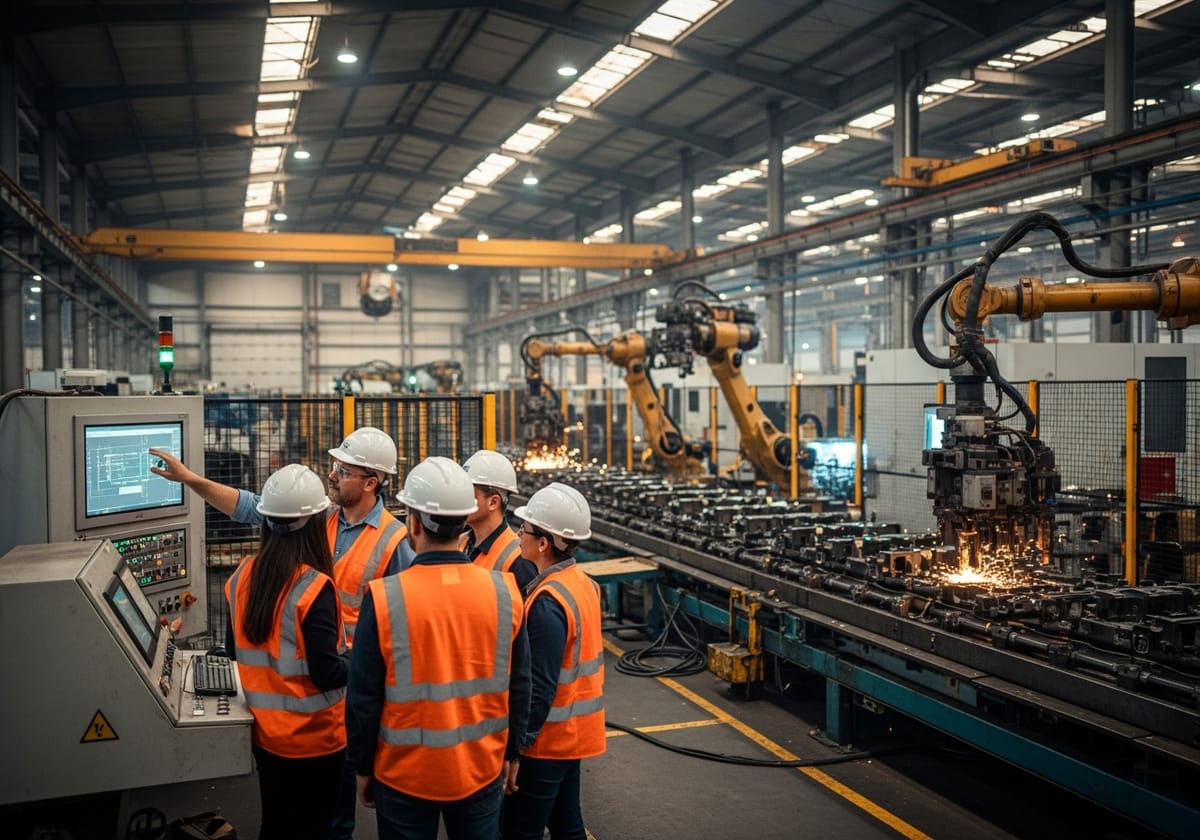
Picture this scene: you walk the plant floor on a Tuesday morning. The machines hum steadily, operators are at their stations, and at first glance production is flowing. At the end of the shift, you check the paper reports or spreadsheets and the numbers look "acceptable." Maybe it wasn't a record day, but there were no catastrophic breakdowns that stopped the line for hours either. And yet, when you close out the month, the profit margin doesn't match the activity you saw.
If this sounds familiar, chances are you're bleeding money silently. The problem isn't the big breakdowns that mobilize the whole maintenance team — the real enemy is micro-stops, brief interruptions and issues that never make it onto any record. In today's industrial environment, what isn't measured isn't just unmanaged — it's actively draining the company's profitability.
In this article, we'll look at how a lack of visibility into small incidents is inflating your production downtime costs and distorting the reality of your factory OEE, keeping you from reaching your plant's true potential.
The illusion of efficiency and the reality of micro-stops
There's a common belief in industrial operations management: if the machine is running most of the time, we're efficient. This mindset, a holdover from traditional management thinking, ignores the corrosive nature of micro-stops.
A micro-stop is a production halt that lasts a short time, usually under five or ten minutes. It might be caused by a jam on the conveyor belt, a dirty sensor that needs a quick clean, a minor tool adjustment, or a short wait for material. The operator, focused on hitting their quota, fixes the problem quickly and gets things running again.
Here's the catch: because the stop was brief and got fixed "on the fly," the operator rarely reports it.
For the operator, stopping to fill out an issue report for a two-minute pause seems counterproductive. But for the plant manager, this lack of data creates a massive blind spot. If a line stops 30 times a day for 2 minutes each, you've lost a full hour of production. Yet in your official records, that hour counts as productive time, which makes your efficiency figures pure fiction.
The math of disaster: the real impact on production downtime costs
When we talk about production downtime costs, we tend to think of the broken part that costs €5,000, or the external technical team billing emergency hours. But the cost of unreported issues is far more insidious, because it eats directly into your margin without leaving an obvious paper trail.
To grasp the real financial scale, we need to break down what makes up this invisible cost:
- Direct labor costs: during those micro-stops, you're paying operators to produce, but they aren't producing. If 10% of your shift is lost to unreported micro-stops, 10% of your direct production payroll is pure waste.
- Energy and resources: many machines consume almost the same energy idling or restarting as they do in full operation. You're paying energy bills to keep equipment running that isn't generating any value.
- Opportunity cost: this is lost revenue. It's not just about what you spend — it's about what you fail to earn. Every unrecorded minute is a product not made that could have been sold.
An alarming statistic
According to recent studies from organizations like the ARC Advisory Group and other industrial consultancies, global manufacturing is estimated to lose roughly 5% of its total production capacity purely to minor stoppages and speed reductions that are never documented. For a plant billing €20 million a year, that represents a million euros lost to the "thin air" of undetected inefficiency.
The devastating effect on factory OEE
OEE (Overall Equipment Effectiveness) is the gold standard for measuring productivity. It's made up of Availability, Performance and Quality. Unreported issues destroy the accuracy of your factory OEE in two fundamental ways:
1. False availability
Availability measures how much time the machine was actually producing versus how much time it was scheduled to run. If operators don't log micro-stops, your system (or your spreadsheet) assumes the machine was running the whole time. This artificially inflates your Availability percentage. You think you're at 95% availability when reality could be closer to 85%.
2. Unexplained performance
This is where the confusion sets in. If your system thinks the machine ran for 8 hours, but the output only amounts to 7 hours of work (because of that hour lost to unreported micro-stops), the OEE calculation will penalize the Performance factor.
Engineers and managers will see poor performance and think: "Why is the machine running slow? Did the cycle lose speed?" They'll spend time and money investigating machine speed, when the real problem was never speed — it was unreported availability. You're diagnosing the wrong illness because your data was corrupted from the source.
Why we still trust "gut feeling" (and why it fails)
Many plant managers remain unaware of this problem because they rely on visual management and their supervisors' experience. "If there were a serious problem, I'd know about it" is a common refrain.
The trouble is that the human brain is excellent at normalizing small deviations. A two-minute stop becomes part of the factory's background noise. It becomes "normal." Without a tool that captures this data automatically or makes logging it frictionless, plant culture adapts to inefficiency.
The traditional barriers to reporting are:
- Paper bureaucracy: smudged forms, missing pens, and the pressure to get the machine running again.
- Fear of blame: if logging an issue means pointing to your own mistake, the operator will avoid doing it.
- Disconnect from the data: the feeling that "writing this down is pointless" because no one ever reviews those papers afterward.
The need to make the invisible visible
To regain control over your production downtime costs, the first step isn't buying new machinery or cutting staff. The first step is lifting the veil covering what's actually happening on your plant floor.
You need to move from a reactive model, where only catastrophes get logged, to a proactive model where every second counts and gets counted. That means digitizing data capture on the floor, removing friction for operators, and automating the truth.
Imagine knowing exactly:
- Which micro-stop repeats 50 times a week.
- Exactly how much money that recurring issue cost you last month.
- What your real factory OEE is, free of distortion.
Only when the data is reliable can decisions be profitable. As long as you keep operating with unreported issues, you'll be running your factory blindfolded, accepting losses that are entirely avoidable.
The technology to shed light on these blind spots exists and is more accessible than you might think. Stopping the bleeding starts with recognizing it's happening.
If you want to find out how much those small stoppages are really costing you and how to turn them into margin, it's time to see what your plant has to tell you.
Ready to uncover the reality of your production?
Request your Solved demo and see your real costs
If you want to keep exploring, we recommend reading How Much Does Issue Management Software Cost and Issue manager: how to choose the best one.