Quality Software for Frozen Food & Seafood
Quality Software for Frozen Food & Seafood
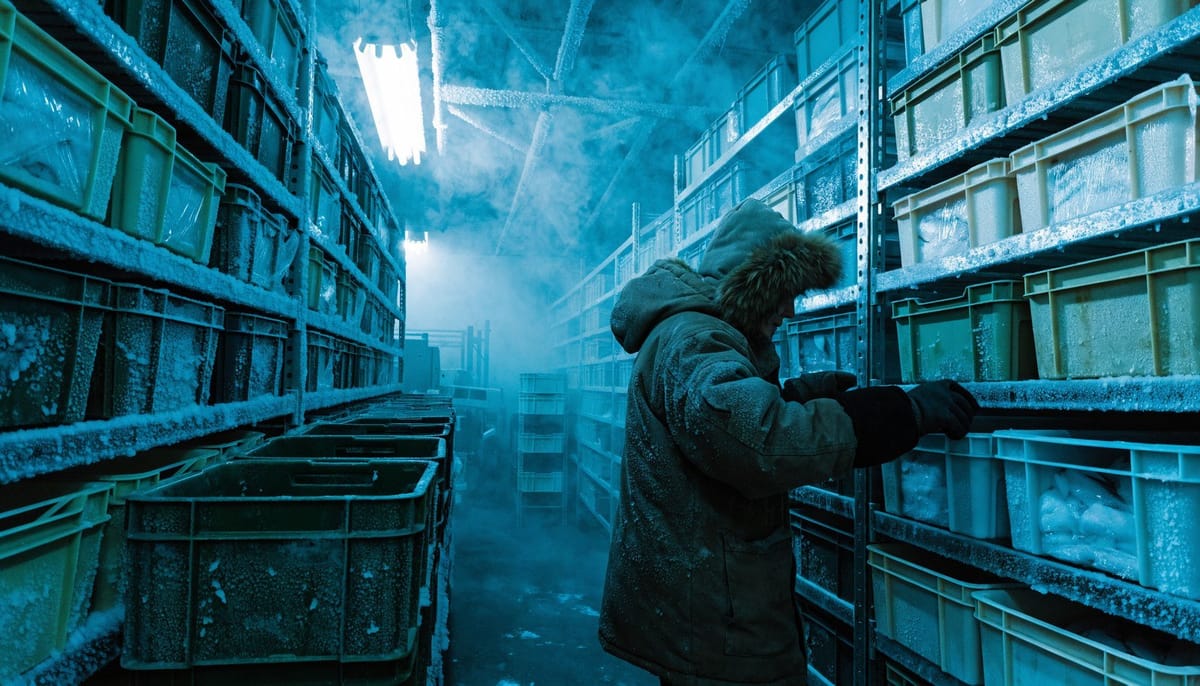
The seafood and fish processing sector operates under a regulatory and operational pressure few food industries know. Critical temperatures that allow zero deviation, cold chains that must hold from the moment of landing all the way to the shelf, and traceability that consumers and auditors expect to reach back to the boat or the catch area. In this environment, having quality software for frozen food specifically built for the sector isn't a luxury — it's a real competitive edge and, in many cases, a necessity for passing certification audits without surprises.
The quality challenges specific to fish and frozen food processing
Fish is one of the food products with the highest microbiological risk and shortest shelf life in its fresh state. Once frozen, the cold chain becomes the central axis of the entire quality management process. Regulation (EC) No 2073/2005 on microbiological criteria for foodstuffs (Regulation [EC] 2073/2005, 2005) sets precise limits that require quality managers to keep rigorous, continuous temperature records at every stage of the process.
Constant temperature control is, without question, the biggest operational challenge. Any break in the cold chain — even a brief one — can compromise an entire batch and, worse, may go undetected in time if controls are handled manually or with generic tools. On top of that there's the complexity of packaging: the IFS Food standard (IFS, n.d.) requires modified-atmosphere or vacuum packaging parameters to be documented and systematically verifiable.
Traceability in the fishing industry is also especially demanding. It's not enough to identify the production batch: you need to connect every box of finished product back to the raw material's origin, the vessel, the FAO catch area, the production method (wild catch or aquaculture) and the supplier. That information needs to be available within minutes when a complaint or a health inspection comes in. Managing all of this with scattered spreadsheets or generic ERP modules is like working blindfolded. If you want to dig deeper into how digitization improves quality control in the food industry overall, traceability is always the starting point.
Why packaging and temperature non-conformities fail more audits in this sector
In certification audits — whether IFS, BRC or FSSC 22000 — auditors in the frozen food and seafood sector zero in on two critical points: temperature records and packaging controls. That's no coincidence. These two areas account for the majority of non-conformities found in companies in this sector.
The most common problem with temperature records isn't that the checks aren't happening — it's that they can't be proven in enough detail. If the auditor asks for last month's storage room temperature records and the quality manager takes twenty minutes to dig up scattered paper sheets, the impression is already negative. Add gaps in the timeline or unfilled columns, and a non-conformity is all but guaranteed. Temperature control in the food industry requires continuous, automatic, auditable records.
Something similar happens with packaging. Sealing parameters, the gas mix ratio in modified atmosphere packaging, product weight, the printed expiration date — every one of these control points has to be documented by batch, by shift and by line. Managed manually, the odds of recording errors, incomplete data or backfilled entries are very high. And auditors know it. A single unrecorded deviation can turn into a major non-conformity that halts certification.
The solution is to digitize these controls so the record is created at the exact moment the measurement is taken, is traceable, and is available for real-time lookup at any time. That's exactly what quality software built for the sector can offer, compared with a generic ERP that doesn't account for these particulars.
Quality software for frozen food: what it needs versus a spreadsheet or a generic ERP
The question many quality managers ask is: why doesn't the ERP we already have, or a well-built spreadsheet, work? The answer is simple: neither one is designed to manage quality in real time on a fish and frozen food production line.
Quality software built for this sector should include, at minimum, the following capabilities:
- Digital logging of in-line controls: the operator can enter data directly from a tablet or screen at the workstation, with no paper and no later transcription.
- Automatic deviation alerts: if a storage room's temperature exceeds the configured threshold, or a product's weight is out of range, the system notifies the quality manager immediately — not at the end of the shift.
- Full batch traceability: from raw material receipt (with origin, supplier and catch area) through to finished product dispatch, the entire flow is logged and retrievable in seconds.
- Integrated non-conformity management: when a deviation is detected, the system lets you open a non-conformity, assign it to an owner, log corrective actions, and track it through to closure, all in the same environment.
- Audit-ready reports and evidence: the auditor can receive a complete report within minutes covering every control carried out in a given period, the batches affected by a deviation, and the actions taken. This is what separates passing an audit with flying colors from suffering a major non-conformity.
If your company also works with canned or semi-preserved fish, you can see how these same principles apply in our article on quality control in canning: challenges and digital solutions.
How to start digitizing without stopping the production line
One of the most common barriers quality managers run into when proposing digitization is the fear of disruption. "We can't stop the line to roll out a new system." It's an understandable concern, but in practice nothing needs to stop.
The most effective way to start is to identify the two or three most critical control points — usually temperature and packaging — and digitize them first. The team gets familiar with the tool in a controlled, low-pressure environment, and within a few weeks digital logging becomes the standard procedure. From there, it's easy to expand scope to other controls: raw material receipt, organoleptic checks, weights, labeling or microbiological testing.
The key is choosing a solution that adapts to the company's process, not the other way around. Flexible, configurable software built for the food industry lets the quality team define its own control plans, frequencies and tolerance limits without needing developers or long rollout projects.
At Solved, we've spent years working alongside companies in the fishing and frozen food sector through exactly this process. Our platform is designed to give the quality manager real control over what happens on the plant floor, with solid evidence for any audit, and the peace of mind that no critical data will get lost in paperwork or emails. If you'd like to see how it works in an environment like yours, we'd be happy to show you.
References
- International Featured Standards. (n.d.). IFS Certification. https://www.ifs-certification.com/
- Commission Regulation (EC) No 2073/2005 of 15 November 2005 on microbiological criteria for foodstuffs. (2005). https://eur-lex.europa.eu/eli/reg/2005/2073/oj?locale=es